* Reading a good book or watching goats graze is considered a “productive day.”
* You stare at foreign tourists as much as the local people do.
* You have to tell people to arrive for a 10:00AM meeting at 9:00AM for the meeting to start on time.
* You yourself begin to not keep time.
* You are awoken to the sounds of crowing roosters, crying goats, barking dogs, singing from morning mass, or children knocking on your door every morning.
* You want to strangle, maybe literally, the crowing roosters or crying goats every morning.
* Pooping in a bucket may be your only option at night.
* People regularly try to cheat you by charging you double or triple the price for any good or service.
* A taxi ride that should take 30 minutes to arrive at your destination actually takes 3 hours.
* Riding on a road full of potholes feels like just another ride on any given day.
* Walking down the street, children shout "muzungu” at you, but when you walk towards them, they run away either laughing or screaming in terror.
* Bucket bathing actually feels like a normal thing to do in the morning.
* Buying a soda for 1,500 UGX, or roughly $.60, is considered a luxury.
* You're using public transport; if your lap is empty, there is always room for more people.
* Coco Finger, Bebe Cool, Radio & Weasel, and Juliana are part of your everyday playlist.
* Rice, beans, and pringles are part of your everyday diet.
* Spiders are no longer your enemy, but rather your ally in the constant fight against bugs (mosquitoes, fleas, ticks, mango flies, Nairobi ants).
* 4 hours is considered to be a long work day.
* You distinguish between your Peace Corps family, your American family, and your Ugandan homestay family.
* 100+ pairs of eyeballs are staring at you at all times.
* You can’t order salad at any restaurant because the water may not be clean.
* Every song in a dance club sounds exactly the same.
* You have to sit in a specific way at a specific place in your house if you want to get internet.
* You have to ask the waitress 5 times to bring you the bill.
* You repeatedly have to air dry your clothes due to the sudden, afternoon rain showers.
* Your electronics die because of the constant dimming and “on-and-off” fluctuation in power.
* You see firsthand the damaging effects of how foreign aid perpetuates dependency, often goes into the wrong hands, and does not eliminate long-term need.
* You see firsthand the innocence, youthfulness, and enthusiasm of children despite the difficult circumstances in which they are often living.
* Yes, your neighbor really does have 18 children.
* 9 out of every 10 times, when you ask a child how he/she is doing, he/she will respond with, “I am fine.”
* The school you teach at is challenged daily with teacher absenteeism, student absenteeism, ineffective teaching, lack of student interest in learning, and a major lack of resources.
* You are often awoken to the sounds of buzzing mosquitoes hungry for your blood flying right outside your mosquito net.
* You enjoy the rare but surprisingly large selection of western food in Kampala.
* The combination of No running water + A flushing toilet + Laziness begins to really irritate your sense of smell after some time.
* You actually look forward to the completely random but vivid dreams that result from your malarial medication.
* Your headlamp becomes your best friend at site.
* President Obama, religion, and European premier league football are everyday conversation topics.
* Waiting typically takes up half your day.
* You learn to laugh at yourself and at the little things in life.
* You’ve made babies cry on multiple occasions because of the color of your skin exterior.
* MTN’s network reception as your phone carrier is not, in actuality, “Everywhere You Go.”
* You grow to really, really like Mexican soaps.
* You grow to really, really like Indian food.
* You feel incredibly fortunate to be living in “the Pearl of Africa” for two years.
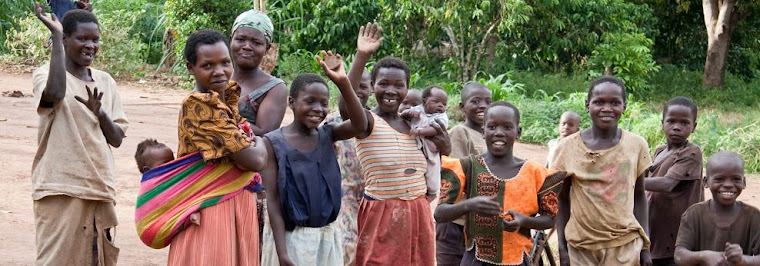
Serving as a Peace Corps Community Health volunteer in Uganda.
Friday, October 14, 2011

Thursday, October 6, 2011
Two New Projects and an Update
The World Map Project
The World Map Project is an initiative created by Peace Corps volunteer Barbara Jo White (Dominican Republic, 1987-1989). Simply put, the project involves drawing and painting a map of the world on any flat surface (e.g. the wall of a school building) using the Grid Method (transferring information from pre-gridded map sheets onto the flat surface) or the Projection Method (using an overhead projector and a single world map transparency). In addition to a number of fantastic Peace Corps Uganda World Map Projects that have recently been completed, I plan to do one at Kongunga Primary School using the Projection Method in the next couple of weeks.
Why the World Map Project?
* It's relatively easy and simple for anybody to complete.
* It teaches students about geography and the world around them.
* It can be drawn and painted anywhere (school walls, classrooms, community buildings, libraries, etc).
* It instills pride, accomplishment, and teamwork.
To read more about the initiative, visit:
http://multimedia.peacecorps.gov/multimedia/pdf/library/R0088_worldmapproject.pdf
http://www.theworldmapproject.com/
Women's Group
Yesterday was the first meeting of the Women's Group I am continuing at the Mission; the group, of not more than 20 women, was initially started by a previous volunteer (not Peace Corps) and co-led by Betty. The purpose of the group is to discuss health-related issues; issues of gender, diversity, and self-respect; and any other issues that the members, perhaps, don't feel comfortable sharing with their husbands or families. I hope to empower the women in the group by providing them with a safe place to talk about issues that concern their everyday livelihoods. The group will meet every Tuesday at 2:00PM.
Update on the Composition Writing Assignment...
Written about in a previous post, I am primarily teaching composition writing in my Senior 3 English class this term. Each week, my students have been responding to composition writing topics in their journals; in turn, Atim Christine (my teaching counterpart) and I have been giving weekly feedback/constructive criticism/suggestions for areas of improvement. To be honest, while some students' writing has noticeably improved from week to week, I anticipate this to be a slow and gradual process. For many of my students, for instance, this is the first time they are being asked to use critical thinking, write with description, include an introduction and conclusion in their writing, and explain more than just listing points with, "Because of the following reasons..." If I can teach them to move past their natural inclination to just list without describing "why?" or "how?" and write more freely, openly, and sincerely, the assignment won't be all for naught. Only time will tell...
The World Map Project is an initiative created by Peace Corps volunteer Barbara Jo White (Dominican Republic, 1987-1989). Simply put, the project involves drawing and painting a map of the world on any flat surface (e.g. the wall of a school building) using the Grid Method (transferring information from pre-gridded map sheets onto the flat surface) or the Projection Method (using an overhead projector and a single world map transparency). In addition to a number of fantastic Peace Corps Uganda World Map Projects that have recently been completed, I plan to do one at Kongunga Primary School using the Projection Method in the next couple of weeks.
Why the World Map Project?
* It's relatively easy and simple for anybody to complete.
* It teaches students about geography and the world around them.
* It can be drawn and painted anywhere (school walls, classrooms, community buildings, libraries, etc).
* It instills pride, accomplishment, and teamwork.
To read more about the initiative, visit:
http://multimedia.peacecorps.gov/multimedia/pdf/library/R0088_worldmapproject.pdf
http://www.theworldmapproject.com/
Women's Group
Yesterday was the first meeting of the Women's Group I am continuing at the Mission; the group, of not more than 20 women, was initially started by a previous volunteer (not Peace Corps) and co-led by Betty. The purpose of the group is to discuss health-related issues; issues of gender, diversity, and self-respect; and any other issues that the members, perhaps, don't feel comfortable sharing with their husbands or families. I hope to empower the women in the group by providing them with a safe place to talk about issues that concern their everyday livelihoods. The group will meet every Tuesday at 2:00PM.
Update on the Composition Writing Assignment...
Written about in a previous post, I am primarily teaching composition writing in my Senior 3 English class this term. Each week, my students have been responding to composition writing topics in their journals; in turn, Atim Christine (my teaching counterpart) and I have been giving weekly feedback/constructive criticism/suggestions for areas of improvement. To be honest, while some students' writing has noticeably improved from week to week, I anticipate this to be a slow and gradual process. For many of my students, for instance, this is the first time they are being asked to use critical thinking, write with description, include an introduction and conclusion in their writing, and explain more than just listing points with, "Because of the following reasons..." If I can teach them to move past their natural inclination to just list without describing "why?" or "how?" and write more freely, openly, and sincerely, the assignment won't be all for naught. Only time will tell...
A New Cat at the Mission?
A few days ago, a baby kitten randomly wandered into the grounds of the Mission. It couldn't have been more than a few weeks old. We have no idea who the kitten belongs to (or if he/she will retrieve it) or where it came from, but rumor has it that it may be the pet of a shopowner in town. Naturally, with a new pet at the Mission to garner our affection, this perked the interest and attention, and perhaps a little jealously, of Fugoso. The two have already had a few run-ins, much to the excitement and amusement of the neighborhood kids.


The Concept of Waiting
If there's one thing that I have not yet rightfully adjusted to or embraced in Uganda, it's the act of waiting. Waiting for things to happen. Waiting for people to show up to meetings. Waiting for students to show up to class. Waiting for food to be delivered. Waiting for the internet to work. Waiting for the power to return. Waiting for matatus (van taxis) to leave the taxi park. Waiting for promises to be kept. Waiting for lines at the ATM to move. Believe me, I've tried waiting, and I've been forced to wait. But it's simply not in my DNA. I'm a go-getter. I like getting things done. I selfishly like the satisfaction of a job well done. If I just wait or sit around, I personally feel like I'm being unproductive. Therefore, living in a host culture in which waiting is common, if not the norm, has deeply challenged my "get it done" mentality. Waiting is a habit I may never embrace nor understand while in Uganda, but I still have to accept it, because indeed, it's the way of life here.


Tuesday, September 20, 2011
British/Uganglish-American English Translations
You know that you've been living in Uganda a while when you naturally start asking your neighbor "Are you picking me?" or claiming to a friend "Ah, you are deceiving me" as part of your everyday vocabulary. The following are either British sayings spoken in Uganda or Ugandan adaptations of British English that I have repeatedly heard since arriving in-country. Some sayings are widely spoken throughout Uganda; others are uniquely spoken primarily in my village.
BRITISH ENGLISH/UGANGLISH:
(a) Sweets
(b) Chips
(c) Crisps
(d) Biscuits
(e) Torch
(f) Rubbish
(g) Football
(h) Trousers
(i) Videos
(j) "Are you picking me?"
(k) "Extend"
(l) "Why do you fear talking to me?"
(m) "You are deceiving"
(n) "I will ring her"
(o) "You look fat"
(p) "You've been lost"
(q) "I am fair"
(r) "Mind the dog"
AMERICAN ENGLISH:
(a) Candy
(b) French fries
(c) Chips
(d) Cookies
(e) Light
(f) Trash
(g) Soccer
(h) Pants
(i) Movies/TV shows
(j) "Are you understanding me?
(k) "Move over"
(l) "Why are you afraid to talk to me?"
(m) "You are lying"
(n) "I will call her"
(o) "You look healthy/strong"
(p) "You've been gone/away"
(q) "I am okay"
(r) "Avoid/be aware of the dog"
BRITISH ENGLISH/UGANGLISH:
(a) Sweets
(b) Chips
(c) Crisps
(d) Biscuits
(e) Torch
(f) Rubbish
(g) Football
(h) Trousers
(i) Videos
(j) "Are you picking me?"
(k) "Extend"
(l) "Why do you fear talking to me?"
(m) "You are deceiving"
(n) "I will ring her"
(o) "You look fat"
(p) "You've been lost"
(q) "I am fair"
(r) "Mind the dog"
AMERICAN ENGLISH:
(a) Candy
(b) French fries
(c) Chips
(d) Cookies
(e) Light
(f) Trash
(g) Soccer
(h) Pants
(i) Movies/TV shows
(j) "Are you understanding me?
(k) "Move over"
(l) "Why are you afraid to talk to me?"
(m) "You are lying"
(n) "I will call her"
(o) "You look healthy/strong"
(p) "You've been gone/away"
(q) "I am okay"
(r) "Avoid/be aware of the dog"
Thursday, September 15, 2011
Travel Fever
What are the benefits of roughing it for two years of service as a Peace Corps volunteer in a developing country?
1. The opportunity to make a significant impact in the lives of others.
2. The opportunity for cultural exchange and understanding.
3. The opportunity to learn and become fluent in another language.
4. The opportunity for introspection, soul searching, and to truly learn about oneself.
5. The tangible benefits of deferred student loans, readjustment allowance (about $7,400), accrued vacation days during service (2 vacation days per month of service), and medical, dental, and health insurance.
6. The opportunity to travel after service.
This post concerns the last of the six. Yes, I know it's still relatively early into my service. Without a doubt, I'm going to miss waking up to the sounds of dog barks, goat cries, knocking children pleading for candy, and singing from morning mass every morning, greeting every person that I walk past with "yoga noi," being the only muzungu in my village, getting asked at least five times a day for money, and maintaining a much healthier diet than I do in the States. I'm going to miss the utterly ridiculous but comical stereotypes Ugandans maintain about Americans, the quirks of Ugandan culture that I still have yet to understand, and the opportunity to speak a language other than my native dialect "reasonably" well. But admittedly, one year into my Peace Corps service at site, I'm already salivating over the opportunity and options available to me for post-COS (completion of service) travel.
Those who know me best know my passion for traveling. For me, planning a trip and the anticipation of the trip are as fun as the trip itself. I love the challenge of immersing in another culture. I love the challenge of having to converse with locals in a language that I don't understand. I love venturing into the unknown. I love touring bustling cities, beautiful landscapes, iconic landmarks, historical monuments, and world heritage sites. For me, as confirmed on my trip last month to Zambia and Kenya, traveling is one of my biggest passions.
Even better, at each training group's COS conference, Peace Corps offers volunteers a cash in-lieu option in place of a plane ticket home (a refund of the value of the plane ticket). Peace Corps also gives volunteers 1/3 of their readjustment allowance, about $2,000, two weeks before they leave their country of service. So I could possibly have about $4,000+ that I can use for travel after service.
I've very briefly started planning my post-COS trip. It looks something like this:
Uganda to Egypt (Cairo, the Nile River, Luxor)
Egypt to Israel (Jerusalem, Tel Aviv, the Dead Sea)
Israel to Turkey (Istanbul)
Turkey to India (Delhi, Jaipur, Agra)
India to Thailand (Bangkok)
Thailand to Cambodia (Siem Reap/Angkor)
Cambodia to U.S.A.
This itenerary is very much in the planning stages, and likely to be altered. Any travel ideas or feedback are welcome and certainly appreciated.
1. The opportunity to make a significant impact in the lives of others.
2. The opportunity for cultural exchange and understanding.
3. The opportunity to learn and become fluent in another language.
4. The opportunity for introspection, soul searching, and to truly learn about oneself.
5. The tangible benefits of deferred student loans, readjustment allowance (about $7,400), accrued vacation days during service (2 vacation days per month of service), and medical, dental, and health insurance.
6. The opportunity to travel after service.
This post concerns the last of the six. Yes, I know it's still relatively early into my service. Without a doubt, I'm going to miss waking up to the sounds of dog barks, goat cries, knocking children pleading for candy, and singing from morning mass every morning, greeting every person that I walk past with "yoga noi," being the only muzungu in my village, getting asked at least five times a day for money, and maintaining a much healthier diet than I do in the States. I'm going to miss the utterly ridiculous but comical stereotypes Ugandans maintain about Americans, the quirks of Ugandan culture that I still have yet to understand, and the opportunity to speak a language other than my native dialect "reasonably" well. But admittedly, one year into my Peace Corps service at site, I'm already salivating over the opportunity and options available to me for post-COS (completion of service) travel.
Those who know me best know my passion for traveling. For me, planning a trip and the anticipation of the trip are as fun as the trip itself. I love the challenge of immersing in another culture. I love the challenge of having to converse with locals in a language that I don't understand. I love venturing into the unknown. I love touring bustling cities, beautiful landscapes, iconic landmarks, historical monuments, and world heritage sites. For me, as confirmed on my trip last month to Zambia and Kenya, traveling is one of my biggest passions.
Even better, at each training group's COS conference, Peace Corps offers volunteers a cash in-lieu option in place of a plane ticket home (a refund of the value of the plane ticket). Peace Corps also gives volunteers 1/3 of their readjustment allowance, about $2,000, two weeks before they leave their country of service. So I could possibly have about $4,000+ that I can use for travel after service.
I've very briefly started planning my post-COS trip. It looks something like this:
Uganda to Egypt (Cairo, the Nile River, Luxor)
Egypt to Israel (Jerusalem, Tel Aviv, the Dead Sea)
Israel to Turkey (Istanbul)
Turkey to India (Delhi, Jaipur, Agra)
India to Thailand (Bangkok)
Thailand to Cambodia (Siem Reap/Angkor)
Cambodia to U.S.A.
This itenerary is very much in the planning stages, and likely to be altered. Any travel ideas or feedback are welcome and certainly appreciated.
A Repaired Borehole and Filtered Water for All
It has been a busy couple of weeks since returning from Kenya and bidding farewell to my parents.
My first order of business was trying to get the borehole adjacent to the health clinic repaired so that people in the village wouldn't have to carry dirty water long distances (2km each way to and from the well, the only water source in the immediate area) anymore. When I first arrived at site, I was informed that both a district health team from Bukedea and a mechanic from Kampala previously tried to fix the borehole, but they were unsuccessful in their attempts. The borehole was therefore presumed "dead," and left untouched.
Flashback to August 3, the afternoon before I flew out of Uganda to meet my parents in Johannesburg. Upon arrival at the hotel in Entebbe, I met Jack Rose and Martha McBride, as well as Dennis, from Raincatcher and Water 4 Everyone. The team traveled from the U.S. to Uganda, dedicated to the sole purpose of bringing clean and safe drinking water to all, to distribute and train community members how to use Sawyer water filters. After demonstrating to me firsthand the brilliance of the filter - within seconds, it purified dirty, brown water crystal clear - Jack and Martha gave me a filter to bring back to the health clinic and to the people of Kachumbala.
It then occurred to me that if I could get the borehole fixed, people could literally fetch a cup or jerry can of borehole water, and walk, not even 50 feet, to the clinic to filter it.
Fast forward to August 18, when I arrived back at site. After a week of repeated calls and "when can you come?" texts, I finally was able to get a certified mechanic from Bukedea to come with his team to assess the repairs needed to fix the borehole. It turned out that one cracked pipe was the only problem. One cracked pipe that caused a primary water source for hundreds of people to malfunction for 10+ months.
8 hours later? A repaired borehole that was fully funded (90,000 UGX, $35-$40) by the community.
This past Friday, Dennis from Raincatcher and I held a training session on how to use the Sawyer water filter, cleaning water straight from the newly-repaired borehole. The highlight for me was at the end of the training, when one person commented, "I have never seen water so clear before." One filter was given to the health clinic, another to Kongunga Secondary School (the school I teach at), two others to training attendees from villages within the Kachumbala subcounty, as well as a Nike soccer ball to my S3 English class.
Thanks to Jack, Martha, Dennis, and everybody else at Raincatcher for bringing clean water to Kachumbala!


My first order of business was trying to get the borehole adjacent to the health clinic repaired so that people in the village wouldn't have to carry dirty water long distances (2km each way to and from the well, the only water source in the immediate area) anymore. When I first arrived at site, I was informed that both a district health team from Bukedea and a mechanic from Kampala previously tried to fix the borehole, but they were unsuccessful in their attempts. The borehole was therefore presumed "dead," and left untouched.
Flashback to August 3, the afternoon before I flew out of Uganda to meet my parents in Johannesburg. Upon arrival at the hotel in Entebbe, I met Jack Rose and Martha McBride, as well as Dennis, from Raincatcher and Water 4 Everyone. The team traveled from the U.S. to Uganda, dedicated to the sole purpose of bringing clean and safe drinking water to all, to distribute and train community members how to use Sawyer water filters. After demonstrating to me firsthand the brilliance of the filter - within seconds, it purified dirty, brown water crystal clear - Jack and Martha gave me a filter to bring back to the health clinic and to the people of Kachumbala.
It then occurred to me that if I could get the borehole fixed, people could literally fetch a cup or jerry can of borehole water, and walk, not even 50 feet, to the clinic to filter it.
Fast forward to August 18, when I arrived back at site. After a week of repeated calls and "when can you come?" texts, I finally was able to get a certified mechanic from Bukedea to come with his team to assess the repairs needed to fix the borehole. It turned out that one cracked pipe was the only problem. One cracked pipe that caused a primary water source for hundreds of people to malfunction for 10+ months.
8 hours later? A repaired borehole that was fully funded (90,000 UGX, $35-$40) by the community.
This past Friday, Dennis from Raincatcher and I held a training session on how to use the Sawyer water filter, cleaning water straight from the newly-repaired borehole. The highlight for me was at the end of the training, when one person commented, "I have never seen water so clear before." One filter was given to the health clinic, another to Kongunga Secondary School (the school I teach at), two others to training attendees from villages within the Kachumbala subcounty, as well as a Nike soccer ball to my S3 English class.
Thanks to Jack, Martha, Dennis, and everybody else at Raincatcher for bringing clean water to Kachumbala!


Subscribe to:
Posts (Atom)