Hello from Uganda!
I apologize that it has taken me this long to post, but I haven't had any Internet connection since I've been here (except for a visit to the internet cafe). I do get electricity from my homestay, but I have not yet figured out how to go about accessing the Internet.
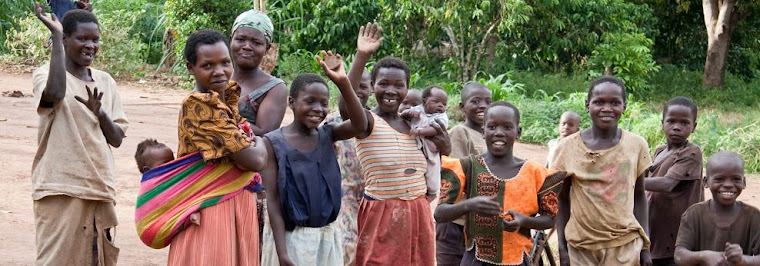
To say my Peace Corps experience thus far has been exceptional would be an understatement. I am having the time of my life. Language training is, at times, very stressful, but Ugandans are some of the most welcoming people I have ever met. I am currently living in the village of Kisimbiri in the town of Wakiso with my homestay family. I have a homestay mother, sister, two brothers, aunt, and a housegirl. They are awesome! They live in a house compound with their own vegetable garden and animals (goat, rooster, hen, chickens). I am grateful for everything they have provided me, and how they have seemingly welcomed me into their family.
To best understand Peace Corps training, here is generally what our daily schedule looks like:
6:30AM-8:00AM - Wakeup, bathe, eat breakfast, walk 2-3KM to the training site
8:00AM-10:00AM - Language training
10:00AM-10:30AM - Morning tea
10:30AM-12:30PM - Technical training
12:30PM-1:30PM - Lunch
1:30PM-3:30PM - Technical training
3:30PM-4:00PM - Afternoon tea
4:00PM-5:00PM - Language training
5:00PM-11:00PM - Walk back to homestay, eat dinner, play soccer with homestay brothers/sister, go to the bar, study
11:00PM - Bed
Technical training has ranged from sessions on diversity and safety/security to sessions on cultural integration and banking. I, along with six other volunteers, am learning the Ateso language, spoken in eastern Uganda. Eastern Uganda is where I will be placed to work for the next two years. We do not recieve our official site placements until late September.
Observations:
1. I have gained a newfound respect for the meaning of hard work. Ugandans are some of the hardest working people I've ever met.
2. President Obama, religion, and soccer are three popular things to talk about in Uganda.
3. I have been referred to as a "mzungu" (white person) at least fifty times, but I've learned to embrace it.
4. Despite tasting and liking many new foods (ovacado, pumpkin, goat meat, black beans, cabbage), eating the same food everyday has been my biggest challenge to date.
5. I have never liked pineapple as much as I do now.
6. I have already made the time-effective decision to hire someone to help me cook/clean.
7. One thing that I do not miss is Washington D.C.'s humidity. Let the 70's/80's weather in Uganda continue...
8. Learning the Ateso language will be more challenging than I previously imagined.
9. Kampala is like no capital city I have ever been to before.
10. The 2011 Presidential Election is incredibly important to Ugandans!
11. Due to the stress of Peace Corps training, time has seemed to move at a much slower pace.
12. I plan to go to church with my host family at least once (hopefully more).
13. I feel incredibly fortunate to serve in a country with such great people and potential for growth, and to be a small part of the Peace Corps Uganda team.
Things that have surprised me:
1. The British influence is still widely prevalent in Uganda (language, British football).
2. Peace Corps volunteers are treated like heroes amongst the people of Wakiso.
3. How quickly I have adjusted to the Ugandan culture, integrated into the community, bonded with my host family, and DO NOT miss the technological comforts back home.
4. The Ateso and Lugandan languages are similar to Spanish in many respects (emphasis on certain vowels, pronunciations).
5. The mosquitoes haven't been bad...yet. Malaria is still a significant issue of concern.
6. Ugandans, at least our homestay families, watch a lot of television, primarily Mexican soap operas and the local news.
7. Ugandans have very different eating habits than Americans. Not only is it their norm to eat dinner at the earliest 8:00PM, but also they eat much larger portions of food. Members of my host family eat nearly triple what I eat.
8. I have perfected the art of bucket bathing, despite the electricity constantly going on and off in the morning.
Friends and family: I miss you all, and am thinking of all of you!
Serving as a Peace Corps Community Health volunteer in Uganda.
Saturday, August 21, 2010

Monday, August 9, 2010
Staging
Day 1: Staging is complete!
There are 45 volunteers in the Peace Corps Uganda group. We have an incredibly diverse group of volunteers coming from all walks of life. I have never met a group of people more enthusiastic and passionate about global volunteerism and service. Staging entailed outlining the Peace Corps mission and expectations, our anxieties and aspirations, and what we should expect in our first week of service.
It's both intimidating and exciting that my Peace Corps experience is finally coming to fruition, finally a reality. It's been a long time coming since I filled out my Peace Corps application in September 2009.
We leave our hotel in Philly at 2:30AM Tuesday morning. As such, I do not plan on sleeping tonight; hopefully, I'll be able to get some sleep on our 15 hour flight to Johannesburg.
Family and friends: I'd like to again thank you all for your support ane encouragement. I wouldn't be here without you.
Until next time...
There are 45 volunteers in the Peace Corps Uganda group. We have an incredibly diverse group of volunteers coming from all walks of life. I have never met a group of people more enthusiastic and passionate about global volunteerism and service. Staging entailed outlining the Peace Corps mission and expectations, our anxieties and aspirations, and what we should expect in our first week of service.
It's both intimidating and exciting that my Peace Corps experience is finally coming to fruition, finally a reality. It's been a long time coming since I filled out my Peace Corps application in September 2009.
We leave our hotel in Philly at 2:30AM Tuesday morning. As such, I do not plan on sleeping tonight; hopefully, I'll be able to get some sleep on our 15 hour flight to Johannesburg.
Family and friends: I'd like to again thank you all for your support ane encouragement. I wouldn't be here without you.
Until next time...
Thursday, July 29, 2010
Letter to Families
July 14, 2010
Dear Families,
Greetings from the Uganda Desk in Washington, D.C. It is with great pleasure that we welcome your family member to Peace Corps. During the past year we have received many requests from Volunteers and family members alike regarding travel plans, sending money, relaying messages and mail, etc. As we are unable to involve ourselves in the personal arrangements of Volunteers, we would like to offer you advice and assistance in advance by providing specific examples of situations and how we suggest they be handled.
Irregular Communication:
The mail service in Uganda is not as efficient as the U.S. Postal Service. Thus, it is important to be patient. It can take three to four weeks for mail coming from Uganda to arrive in the United States via the Ugandan postal system. From a Volunteer's post, mail might take 1-2 months to reach the United States. Sometimes mail is hand carried to the States by a traveler and then mailed through the US postal system. This leg of the trip can take another several weeks, as it is also dependent on the frequency of travelers to the U.S.
We suggest that in your first letters, you ask your Volunteer family member to give an estimate of how long it takes for him/her to receive your letters and then try to establish a predictable pattern of how often you will write to each other. Also, try numbering your letters so that the Volunteer knows if he/she has missed one. Postcards should be sent in envelopes--otherwise they may be found on the wall of the local post office!
Volunteers often enjoy telling their "war" stories when they write home. Letters might describe recent illnesses, lack of good food, isolation, etc. While the subject matter is good reading material, it is often misinterpreted on the home front. Please do not assume that if your family member has been ill that he or she has been unattended. Peace Corps has three Medical Officers on staff in Uganda. Through regular contact, they monitor the health of the Volunteers. In the event of a serious illness, the Volunteer comes to Kampala and is cared for by our medical staff. If the Volunteer requires medical care that is not available in Uganda, he/she will be medically evacuated to Kenya, South Africa or the United States, depending on the medical care required. Fortunately, these are rare circumstances and our Medical Officers are superb!
If, for some reason, your communication pattern is broken and you do not hear from your family member for three months, you should contact the Office of Special Services (OSS) at Peace Corps Washington at 1-800-424-8580, extension 1470. OSS will then contact the Peace Corps Director and ask her/him to check up on the Volunteer. Also, in the case of an emergency at home (death in the family, sudden illness, etc.), please do not hesitate to call OSS immediately so that the Volunteer will be informed as soon as possible.
Email Access and Telephone Calls:
E-mail access is very limited in some areas and sometimes non existent. Volunteers may have email access as little as one a month, or even once every two months.
The telephone system in Uganda is relatively good. Service to the United States is somewhat reliable, phones exist in larger towns, and Volunteers can often plan to be at a phone on a certain date to receive calls from home. This usually works, but there are also innumerable factors that can make the best-laid plans fall apart. Once your Volunteer is in-country, he or she can update you on telephone availability and provide you with his or her specific contact information and logistics.
The Uganda Desk calls the Peace Corps office in Kampala once every two weeks. However, these calls are reserved for business only and we cannot relay personal messages over the phone. All communication between family members and the Volunteer must be done via international mail, or via communication arranged between PCV and family via personal phones, e-mail and the like.
Sending mail during Pre Service Training (PST):
Your name, Peace Corps Trainee
P.O. Box 29348
Kampala, Uganda
Mail after PST should be sent to each individual Volunteer’s PO Box at his or her assigned site, which he or she should communicate to you after settling in to his or her assigned site.
Sending packages:
Both parents and Volunteers like to send and receive care packages through the mail. Unfortunately, sending packages can be a frustrating experience for all involved due to the possible theft and heavy customs taxes. You may want to try to send inexpensive items through the mail, but there is no guarantee that these items will arrive. We do not recommend, however, that costly items be sent through the mail. Once a Volunteer has sworn in and has been placed at their site, they should forward you their mailing address at their new site. Please do not continue to send packages/mail to the above address after Pre-service Training.
We recommend that packages be sent in padded envelopes if possible, as boxes tend to be taxed more frequently. Sending airplane tickets and/or cash is not recommended.
Several services such as DHL, FedEx, UPS do operate in Uganda, but can be very expensive. Certain airlines will allow you to buy a pre-paid ticket in the States; they will telex their Nairobi office to have the ticket ready. Unfortunately, this system is not always reliable. Several European carriers fly to Kampala. Please call the airline of your choice for more information. You could also send tickets via mail services as mentioned previously. However, Peace Corps will assume no liability in the event of a lost/stolen airline ticket.
Trying to send cash or checks is very risky and is discouraged. If your Volunteer family member requests money from you, it is his/her responsibility to arrange for its receipt. There is Western Union service available in Kampala, although there are many charges involved in the sending and exchange of money. Bear in mind that Volunteers will be aware of people visiting the States and can request that they call the Volunteers' families when they arrive in the States should airline tickets or cash need to be sent back to Uganda.
We hope this information is helpful to you during the time your family member is serving as a Peace Corps Volunteer in Uganda. We understand how frustrating communication difficulties can be when your family member is overseas. and we appreciate your using this information as a guide. Please feel free to contact us at the Uganda Desk in Washington, D.C. if you have any further questions. Our phone number is 1-800-424-8580, ext. 2324 or locally, 202-692-2324/202-692-2324.
Sincerely,
Julie Bohn, Desk Officer, Ext. 2324
Dear Families,
Greetings from the Uganda Desk in Washington, D.C. It is with great pleasure that we welcome your family member to Peace Corps. During the past year we have received many requests from Volunteers and family members alike regarding travel plans, sending money, relaying messages and mail, etc. As we are unable to involve ourselves in the personal arrangements of Volunteers, we would like to offer you advice and assistance in advance by providing specific examples of situations and how we suggest they be handled.
Irregular Communication:
The mail service in Uganda is not as efficient as the U.S. Postal Service. Thus, it is important to be patient. It can take three to four weeks for mail coming from Uganda to arrive in the United States via the Ugandan postal system. From a Volunteer's post, mail might take 1-2 months to reach the United States. Sometimes mail is hand carried to the States by a traveler and then mailed through the US postal system. This leg of the trip can take another several weeks, as it is also dependent on the frequency of travelers to the U.S.
We suggest that in your first letters, you ask your Volunteer family member to give an estimate of how long it takes for him/her to receive your letters and then try to establish a predictable pattern of how often you will write to each other. Also, try numbering your letters so that the Volunteer knows if he/she has missed one. Postcards should be sent in envelopes--otherwise they may be found on the wall of the local post office!
Volunteers often enjoy telling their "war" stories when they write home. Letters might describe recent illnesses, lack of good food, isolation, etc. While the subject matter is good reading material, it is often misinterpreted on the home front. Please do not assume that if your family member has been ill that he or she has been unattended. Peace Corps has three Medical Officers on staff in Uganda. Through regular contact, they monitor the health of the Volunteers. In the event of a serious illness, the Volunteer comes to Kampala and is cared for by our medical staff. If the Volunteer requires medical care that is not available in Uganda, he/she will be medically evacuated to Kenya, South Africa or the United States, depending on the medical care required. Fortunately, these are rare circumstances and our Medical Officers are superb!
If, for some reason, your communication pattern is broken and you do not hear from your family member for three months, you should contact the Office of Special Services (OSS) at Peace Corps Washington at 1-800-424-8580, extension 1470. OSS will then contact the Peace Corps Director and ask her/him to check up on the Volunteer. Also, in the case of an emergency at home (death in the family, sudden illness, etc.), please do not hesitate to call OSS immediately so that the Volunteer will be informed as soon as possible.
Email Access and Telephone Calls:
E-mail access is very limited in some areas and sometimes non existent. Volunteers may have email access as little as one a month, or even once every two months.
The telephone system in Uganda is relatively good. Service to the United States is somewhat reliable, phones exist in larger towns, and Volunteers can often plan to be at a phone on a certain date to receive calls from home. This usually works, but there are also innumerable factors that can make the best-laid plans fall apart. Once your Volunteer is in-country, he or she can update you on telephone availability and provide you with his or her specific contact information and logistics.
The Uganda Desk calls the Peace Corps office in Kampala once every two weeks. However, these calls are reserved for business only and we cannot relay personal messages over the phone. All communication between family members and the Volunteer must be done via international mail, or via communication arranged between PCV and family via personal phones, e-mail and the like.
Sending mail during Pre Service Training (PST):
Your name, Peace Corps Trainee
P.O. Box 29348
Kampala, Uganda
Mail after PST should be sent to each individual Volunteer’s PO Box at his or her assigned site, which he or she should communicate to you after settling in to his or her assigned site.
Sending packages:
Both parents and Volunteers like to send and receive care packages through the mail. Unfortunately, sending packages can be a frustrating experience for all involved due to the possible theft and heavy customs taxes. You may want to try to send inexpensive items through the mail, but there is no guarantee that these items will arrive. We do not recommend, however, that costly items be sent through the mail. Once a Volunteer has sworn in and has been placed at their site, they should forward you their mailing address at their new site. Please do not continue to send packages/mail to the above address after Pre-service Training.
We recommend that packages be sent in padded envelopes if possible, as boxes tend to be taxed more frequently. Sending airplane tickets and/or cash is not recommended.
Several services such as DHL, FedEx, UPS do operate in Uganda, but can be very expensive. Certain airlines will allow you to buy a pre-paid ticket in the States; they will telex their Nairobi office to have the ticket ready. Unfortunately, this system is not always reliable. Several European carriers fly to Kampala. Please call the airline of your choice for more information. You could also send tickets via mail services as mentioned previously. However, Peace Corps will assume no liability in the event of a lost/stolen airline ticket.
Trying to send cash or checks is very risky and is discouraged. If your Volunteer family member requests money from you, it is his/her responsibility to arrange for its receipt. There is Western Union service available in Kampala, although there are many charges involved in the sending and exchange of money. Bear in mind that Volunteers will be aware of people visiting the States and can request that they call the Volunteers' families when they arrive in the States should airline tickets or cash need to be sent back to Uganda.
We hope this information is helpful to you during the time your family member is serving as a Peace Corps Volunteer in Uganda. We understand how frustrating communication difficulties can be when your family member is overseas. and we appreciate your using this information as a guide. Please feel free to contact us at the Uganda Desk in Washington, D.C. if you have any further questions. Our phone number is 1-800-424-8580, ext. 2324 or locally, 202-692-2324/202-692-2324.
Sincerely,
Julie Bohn, Desk Officer, Ext. 2324
Tuesday, July 27, 2010
Less than two weeks and counting...
With less than two weeks before I leave for staging (pre-departure orientation August 9) in Philly, these last couple weeks will be spent hanging with friends and family, buying last-minute essentials, preparing myself mentally, and enjoying luxuries such as home-cooked meals (my cooking doesn't come close) and a reliable internet connection.
Since I received my invitation to serve in Uganda in late-May, my life has seemingly moved at a whirl-wind pace. I left my job - residential counselor at the Bridge of Central MA - on July 15; leaving was incredibly bitter-sweet. Despite only working there for little more than a year, I formed close relationships with both the Oberlin Street clients and staff. I considered them to be my "second family" if you will.
To the Oberlin Street staff, it was a pleasure working alongside and getting to know each of you. I could not have asked for a better group of people to learn from, laugh with, speak Spanish to (Que pasa mi mija Maria), and have my lunch food scrutinized over (you know who you are).
To the Oberlin Street clients, thank you for letting me in on your lives. I will never forget your quirks, our daily conversations, and our trips driving around Worcester. You are inspirational people, and I can earnestly say that you all made a tremendous impact on my life. I give you this last piece of advice:
Whether it be your goal to earn your GED, reunite with your daughter, obtain your driver's permit, or quit smoking for good, NEVER give up on your dreams, your short-/long-term goals, and on your path toward recovery.
Here is my staging info. The following is my mailing address for the NEXT THREE MONTHS. Once I am sworn in as a Peace Corps volunteer in October, my address will change. I will let you know the new address when I get it.
Bryan Kobick, PCT
P.O. Box 29348
Kampala, Uganda
Any mail is greatly appreciated. If you want to send me something, consider using a padded envelope instead of a box. The Ugandan mail system can be corrupt, so padded envelope packages are less likely to be tampered with than boxes. It also helps if you write "Air Mail" or "Par Avion" on the envelope, and address me as "Father Bryan Kobick" and draw religious symbols on the package. No, I am not converting religions. No, I do not plan to come back to the States as a priest. Packages that look religiously sacred are, again, less likely to be tampered with than boxes. Finally, please be aware that it can take anywhere from 1-3 months for mail to arrive in Uganda. So anything you send me in January may not arrive until March, and vice-versa.
Until then, less than two weeks and counting...
Since I received my invitation to serve in Uganda in late-May, my life has seemingly moved at a whirl-wind pace. I left my job - residential counselor at the Bridge of Central MA - on July 15; leaving was incredibly bitter-sweet. Despite only working there for little more than a year, I formed close relationships with both the Oberlin Street clients and staff. I considered them to be my "second family" if you will.
To the Oberlin Street staff, it was a pleasure working alongside and getting to know each of you. I could not have asked for a better group of people to learn from, laugh with, speak Spanish to (Que pasa mi mija Maria), and have my lunch food scrutinized over (you know who you are).
To the Oberlin Street clients, thank you for letting me in on your lives. I will never forget your quirks, our daily conversations, and our trips driving around Worcester. You are inspirational people, and I can earnestly say that you all made a tremendous impact on my life. I give you this last piece of advice:
Whether it be your goal to earn your GED, reunite with your daughter, obtain your driver's permit, or quit smoking for good, NEVER give up on your dreams, your short-/long-term goals, and on your path toward recovery.
Here is my staging info. The following is my mailing address for the NEXT THREE MONTHS. Once I am sworn in as a Peace Corps volunteer in October, my address will change. I will let you know the new address when I get it.
Bryan Kobick, PCT
P.O. Box 29348
Kampala, Uganda
Any mail is greatly appreciated. If you want to send me something, consider using a padded envelope instead of a box. The Ugandan mail system can be corrupt, so padded envelope packages are less likely to be tampered with than boxes. It also helps if you write "Air Mail" or "Par Avion" on the envelope, and address me as "Father Bryan Kobick" and draw religious symbols on the package. No, I am not converting religions. No, I do not plan to come back to the States as a priest. Packages that look religiously sacred are, again, less likely to be tampered with than boxes. Finally, please be aware that it can take anywhere from 1-3 months for mail to arrive in Uganda. So anything you send me in January may not arrive until March, and vice-versa.
Until then, less than two weeks and counting...
Thursday, June 24, 2010
Inspirational Quote
Upon driving to work a few days ago, this quote was displayed on a billboard.
"No person was ever honored for what they received. Honor has been the reward for what they gave."
- Calvin Coolidge
I would think that most volunteers would not identify 'honor' as their primary motivation for joining the Peace Corps. Our motivations for applying, interviewing, and enduring the year-long, medically-intensive process vary: helping those less fortunate, personal growth, the opportunity to immerse oneself in an entirely different culture, and the opportunity to travel.
The quote, however, had me thinking about the reciprocal relationship between PCV's and in-country locals. Volunteers serve - work in education, agriculture, business, health, or community development - their respective communities, while reciprocally, conversing and learning from in-country locals provides PCV's with an enriching, cultural experience.
Just a thought.
"No person was ever honored for what they received. Honor has been the reward for what they gave."
- Calvin Coolidge
I would think that most volunteers would not identify 'honor' as their primary motivation for joining the Peace Corps. Our motivations for applying, interviewing, and enduring the year-long, medically-intensive process vary: helping those less fortunate, personal growth, the opportunity to immerse oneself in an entirely different culture, and the opportunity to travel.
The quote, however, had me thinking about the reciprocal relationship between PCV's and in-country locals. Volunteers serve - work in education, agriculture, business, health, or community development - their respective communities, while reciprocally, conversing and learning from in-country locals provides PCV's with an enriching, cultural experience.
Just a thought.
Monday, June 7, 2010
Aspiration Statement
Peace Corps invitees are required to submit an aspiration statement describing their strategies for working effectively with host country partners, strategies for adapting to a new culture, skills and knowledge they hope to gain during pre-service training, and how Peace Corps service will influence their personal and professional aspirations. Here is mine:
A. What professional attributes do you plan to use, and what aspirations do you hope to fulfill, during your Peace Corps service?
Stemming from courses that I took in the Masters of Public Administration (MPA) program at Clark University, I plan to bring leadership, managerial, and organizational skills to the NGO I work for. Furthermore, I will bring cultural sensitivity and open-mindedness to integrate with Ugandan locals, patience and a sincere willingness to learn the country’s official and local languages, and problem solving and motivational skills to encourage locals to volunteer and learn about significant issues that affect their livelihoods.
During my Peace Corps service, I aspire to utilize the knowledge and skills that I learned in my graduate, public administration program to benefit the NGO I work for and the Ugandan community I live in. On a personal level, I hope to expand my knowledge of the Ugandan culture, gain the respect and trust of the Ugandan locals, truly make a lasting impact in the community I serve, personally grow as an individual, and ascertain if NGO/nonprofit work is the career path I wish to pursue after Peace Corps service.
B. What are your strategies for working effectively with host country partners to meet their expressed needs?
Getting the opportunity to work and live with host country partners (HCP’s) and Ugandan locals was one of my primary motivations for joining the Peace Corps. In order to work effectively with host country partners to meet their expressed needs, I will begin my service with an open mind, an eager readiness, and patience to overcome cultural and linguistic differences; adjust according to the interests, values, and needs of the HCP’s; and work collaboratively with the HCP’s to provide long-term sustainability (improved development and health) to the community I serve.
C. What are your strategies for adapting to a new culture with respect to your own cultural background?
I believe that I am prepared to put aside my American culture to fully adapt to and immerse myself in the Ugandan culture. Not only is it important to begin Peace Corps service as an observer, but also to enter with cultural sensitivity and awareness. For example, adaquately learning to speak the local language, adhering to the Ugandan diet, and living according to the Ugandan lifestyle are all necessary for cultural integration and acceptance in the community, which will enable me to build relationships and gain the respect and trust of the locals. Nevertheless, I still hope to share (and commendably represent) facets of American culture with in-country locals.
D. What skills and knowledge do you hope to gain during pre-service training to best serve your future community and project?
During pre-service training, I hope to gain knowledge about nongovernmental organizations that will enable me to effectively serve my NGO and promote sustainable development in the community. For example, I would benefit from learning strategies on how to recruit volunteers, and educate locals about the importance of mitigating the spread of HIV/AIDS and maintaining proper and sanitary health standards. I also hope to gain the necessary language skills so that I can become fluent in the local language to communicate with HCP’s and in-country locals. Finally, I hope to enhance my cooking skills by learning how to prepare local dishes and cook independently on my own.
E. How do you think Peace Corps service will influence your personal and professional aspirations after your service ends?
Peace Corps service will greatly influence my personal and professional aspirations. On a professional level, it will afford me clarity of my career aspirations by helping me determine if NGO/nonprofit public service work is a suitable career path. On a personal level, it will increase my self-confidence, provide a great sense of self-fulfillment and gratification, and open my eyes to a new culture. Without question Peace Corps service will challenge me physically, mentally, socially, and my moral beliefs (egalitarianism, democratic government, support of animal rights). However, I am prepared and excited to embrace all that the Peace Corps experience has to offer.
A. What professional attributes do you plan to use, and what aspirations do you hope to fulfill, during your Peace Corps service?
Stemming from courses that I took in the Masters of Public Administration (MPA) program at Clark University, I plan to bring leadership, managerial, and organizational skills to the NGO I work for. Furthermore, I will bring cultural sensitivity and open-mindedness to integrate with Ugandan locals, patience and a sincere willingness to learn the country’s official and local languages, and problem solving and motivational skills to encourage locals to volunteer and learn about significant issues that affect their livelihoods.
During my Peace Corps service, I aspire to utilize the knowledge and skills that I learned in my graduate, public administration program to benefit the NGO I work for and the Ugandan community I live in. On a personal level, I hope to expand my knowledge of the Ugandan culture, gain the respect and trust of the Ugandan locals, truly make a lasting impact in the community I serve, personally grow as an individual, and ascertain if NGO/nonprofit work is the career path I wish to pursue after Peace Corps service.
B. What are your strategies for working effectively with host country partners to meet their expressed needs?
Getting the opportunity to work and live with host country partners (HCP’s) and Ugandan locals was one of my primary motivations for joining the Peace Corps. In order to work effectively with host country partners to meet their expressed needs, I will begin my service with an open mind, an eager readiness, and patience to overcome cultural and linguistic differences; adjust according to the interests, values, and needs of the HCP’s; and work collaboratively with the HCP’s to provide long-term sustainability (improved development and health) to the community I serve.
C. What are your strategies for adapting to a new culture with respect to your own cultural background?
I believe that I am prepared to put aside my American culture to fully adapt to and immerse myself in the Ugandan culture. Not only is it important to begin Peace Corps service as an observer, but also to enter with cultural sensitivity and awareness. For example, adaquately learning to speak the local language, adhering to the Ugandan diet, and living according to the Ugandan lifestyle are all necessary for cultural integration and acceptance in the community, which will enable me to build relationships and gain the respect and trust of the locals. Nevertheless, I still hope to share (and commendably represent) facets of American culture with in-country locals.
D. What skills and knowledge do you hope to gain during pre-service training to best serve your future community and project?
During pre-service training, I hope to gain knowledge about nongovernmental organizations that will enable me to effectively serve my NGO and promote sustainable development in the community. For example, I would benefit from learning strategies on how to recruit volunteers, and educate locals about the importance of mitigating the spread of HIV/AIDS and maintaining proper and sanitary health standards. I also hope to gain the necessary language skills so that I can become fluent in the local language to communicate with HCP’s and in-country locals. Finally, I hope to enhance my cooking skills by learning how to prepare local dishes and cook independently on my own.
E. How do you think Peace Corps service will influence your personal and professional aspirations after your service ends?
Peace Corps service will greatly influence my personal and professional aspirations. On a professional level, it will afford me clarity of my career aspirations by helping me determine if NGO/nonprofit public service work is a suitable career path. On a personal level, it will increase my self-confidence, provide a great sense of self-fulfillment and gratification, and open my eyes to a new culture. Without question Peace Corps service will challenge me physically, mentally, socially, and my moral beliefs (egalitarianism, democratic government, support of animal rights). However, I am prepared and excited to embrace all that the Peace Corps experience has to offer.
Wednesday, June 2, 2010
Moving Forward
Welcome to my first official blog post! When I leave for Uganda, I will try to keep this blog as up-to-date as possible. I may not have much, if any, Internet service once I'm there. I've read journals from Returning Peace Corps Volunteers (RPCVs) that Internet service in Uganda is severely limited. The exception is if I live and work for a NGO in Uganda's capital city of Kampala.
I unexpectedly received my official invitation from the Peace Corps last Friday. I say unexpectedly because I wasn't anticipating the invitation to be mailed to my home address in Virginia, but rather to my school address in Massachusetts. While my initial state of euphoria has worn off since last Friday, I couldn't be more stoked to serve as a NGO Development volunteer in Uganda! I don't receive my work placement until the end of the three-month training (October 20), but I think my work will entail mitigating the spread of HIV/Aids through public education and awareness, promoting proper sanitation and clean water usage, improving the health and livelihoods of the Ugandan people, and promoting income-generating, sustainable, and community development activities. Also, I've read about volunteers who have conducted secondary projects such as running soccer camps for children, introducing Boy Scouts and Girl Scouts to youth, and planting gardens throughout their respective communities. I couldn't be more excited for August 9 to arrive!
Yet with my excitement comes anxiety and a number of challenges. I don't think it's hit me yet that I'm moving from a country that I've lived in all my life to a country to which I'm completely unfamiliar. Learning and adapting to the Ugandan culture, language, and livelihood will undoubtedly challenge me mentally, physically, and socially. No contact with family or friends will also be challenging. And I better learn to cook for myself Ugandan-style; I foresee no opportunity for take-out or microwavable food.
I guess, then, that the saying stands true: "Serving as a Peace Corps volunteer is the toughest job you'll ever love."
I unexpectedly received my official invitation from the Peace Corps last Friday. I say unexpectedly because I wasn't anticipating the invitation to be mailed to my home address in Virginia, but rather to my school address in Massachusetts. While my initial state of euphoria has worn off since last Friday, I couldn't be more stoked to serve as a NGO Development volunteer in Uganda! I don't receive my work placement until the end of the three-month training (October 20), but I think my work will entail mitigating the spread of HIV/Aids through public education and awareness, promoting proper sanitation and clean water usage, improving the health and livelihoods of the Ugandan people, and promoting income-generating, sustainable, and community development activities. Also, I've read about volunteers who have conducted secondary projects such as running soccer camps for children, introducing Boy Scouts and Girl Scouts to youth, and planting gardens throughout their respective communities. I couldn't be more excited for August 9 to arrive!
Yet with my excitement comes anxiety and a number of challenges. I don't think it's hit me yet that I'm moving from a country that I've lived in all my life to a country to which I'm completely unfamiliar. Learning and adapting to the Ugandan culture, language, and livelihood will undoubtedly challenge me mentally, physically, and socially. No contact with family or friends will also be challenging. And I better learn to cook for myself Ugandan-style; I foresee no opportunity for take-out or microwavable food.
I guess, then, that the saying stands true: "Serving as a Peace Corps volunteer is the toughest job you'll ever love."
Subscribe to:
Posts (Atom)