With the holiday season rapidly approaching, what better way to make a meaningful impact in the lives of Ugandan children than to contribute to the "Libraries for Life - Peace Corps Uganda" project.
Partnering with Books for Africa (BfA), the project aims to build libraries in selected schools throughout Uganda. By supplying schools with textbooks, workbooks, novels, reference books, school supplies, and other resources, we (two other Peace Corps volunteers, children's author Jean Ready, and myself) hope to encourage a culture of reading that is fun yet educational. Books spark intellectual curiosity, encourage kids to think critically and creatively, and put a powerful face to words.
Unfortunately, the majority of schools in Uganda - including the schools participating in this project - have a very limited supply (if any) of books. Many of my students have never before opened a textbook or novel, or learned how to use a book's index or table of contents.
This is where we need your help. In order to have the donated books, supplied by BfA, shipped to Kampala, Uganda, we need to clear the books from port by first paying the shipping charges (approximately $14,000) and port/clearance charges (approximately $2,000), in addition to the costs needed to rent out space to sort through the books, and to deliver the books via truck to the beneficiary schools.
If you find yourself in position to donate to "Libraries for Life - Peace Corps Uganda", please visit Books for Africa's donation page (https://www.booksforafrica.org/donate/to-project.html), scroll down to the Uganda subheading, and click on the said project link.
Any sum that you are able to contribute is greatly appreciated, and will go a long way to building new libraries, with about 4,000 books in each, in selected schools around Uganda!
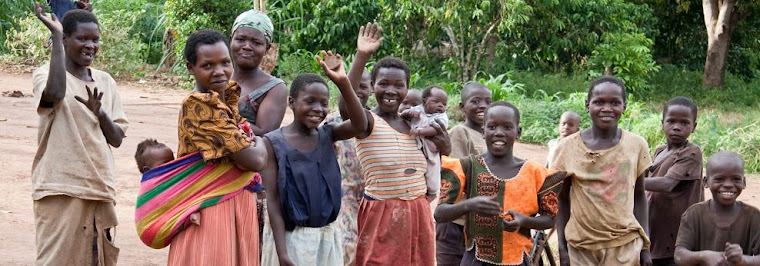
Serving as a Peace Corps Community Health volunteer in Uganda.
Thursday, November 24, 2011

Friday, November 18, 2011
It Was Only A Matter of Time
Today, I was traveling from Mbale to Kampala for my upcoming midservice medical checkup. Proud of myself for waking up at 5:00AM, I managed to catch the 7:30AM Elgon Flyer bus. I secured a seat in the back, hoping to slyly hide the vacant seat directly next to me.
For those who are unfamiliar with Ugandan transportation, it is rare, almost unheard of, to secure a seat on a bus, car taxi, or matatu without at least one person sitting next to/on top of you. For example, it is the norm to be jammed five people on a seat intended to sit two people. Because bus companies understandably want to maximize their profit on any given journey by filling up every available seat, customer satisfaction/comfort is essentially disregarded. No sweat, right?
Waiting quietly in the back for the bus to leave for Kampala, I thought I had outsmarted the bus conducter. One minute before departure, I was sadly mistaken. "You sit next to the muzunugu," I hear from the conducter, directed at a woman with a baby (not more than a few months old) in-hand. I immediately curse my luck. Sitting next to a presumably crying baby is not how I want to spend the next four hours of my day.
To my surprise, the baby was remarkably well-behaved and cryless, so much that I managed to fall asleep. All was going fine until, two hours later after passing Jinja town, I am suddenly awoken to "Bllaahhhhh." Initially confused by the sound, I wake up to my shirt and pants covered in vomit. It takes me 2-3 seconds to actually realize what just happened. With the mother profusely apologizing "I am sorry" and hundreds of eyes staring at me, wondering from where the nauseating smell and sound originated, I embarrassingly begin to clean/wash my shirt with my water. The conducter then comes over to ask if I am doing okay. Outwardly, I say, "I am fine." Inwardly, I am passing much of the blame on him.
The irony of it all? The mother and her baby proceed to get off the bus in Lugazi town (not in Kampala), not even 20 minutes after my shower of baby vomit. A prime example of bad timing at its finest.
The morals of the story? In Uganda, to expect the unexpected. To embrace everything, even the gross things, as they come because they may never come again stateside. And to perhaps sleep in and catch the 8:30AM Elgon Flyer bus to Kampala instead.
It was bound to happen. It was only a matter of time.
For those who are unfamiliar with Ugandan transportation, it is rare, almost unheard of, to secure a seat on a bus, car taxi, or matatu without at least one person sitting next to/on top of you. For example, it is the norm to be jammed five people on a seat intended to sit two people. Because bus companies understandably want to maximize their profit on any given journey by filling up every available seat, customer satisfaction/comfort is essentially disregarded. No sweat, right?
Waiting quietly in the back for the bus to leave for Kampala, I thought I had outsmarted the bus conducter. One minute before departure, I was sadly mistaken. "You sit next to the muzunugu," I hear from the conducter, directed at a woman with a baby (not more than a few months old) in-hand. I immediately curse my luck. Sitting next to a presumably crying baby is not how I want to spend the next four hours of my day.
To my surprise, the baby was remarkably well-behaved and cryless, so much that I managed to fall asleep. All was going fine until, two hours later after passing Jinja town, I am suddenly awoken to "Bllaahhhhh." Initially confused by the sound, I wake up to my shirt and pants covered in vomit. It takes me 2-3 seconds to actually realize what just happened. With the mother profusely apologizing "I am sorry" and hundreds of eyes staring at me, wondering from where the nauseating smell and sound originated, I embarrassingly begin to clean/wash my shirt with my water. The conducter then comes over to ask if I am doing okay. Outwardly, I say, "I am fine." Inwardly, I am passing much of the blame on him.
The irony of it all? The mother and her baby proceed to get off the bus in Lugazi town (not in Kampala), not even 20 minutes after my shower of baby vomit. A prime example of bad timing at its finest.
The morals of the story? In Uganda, to expect the unexpected. To embrace everything, even the gross things, as they come because they may never come again stateside. And to perhaps sleep in and catch the 8:30AM Elgon Flyer bus to Kampala instead.
It was bound to happen. It was only a matter of time.
Monday, November 14, 2011
The World Map Project at Kongunga Primary School


Thanks to the students and teachers of Kongunga Primary School for their hard work and dedication on this project. Next up: the World Map Project at Kongunga Secondary School!
Thursday, November 10, 2011
Midservice
My apologies for my several week absence from updating the blog.
Two weeks ago was my midservice conference in Masaka, with all 44 volunteers from my training group. It was great to reconnect with my fellow PCV's, some of whom I haven't seen since IST back in January. A training group's midservice conference signifies the halfway point in their two years of service. The purpose of the conference is to share successes, challenges, and frustrations; pool resources; and to develop a new workplan and monthly project goals.
Midservice is also the time to really do soul-searching and begin to question what is next for me? What the heck do I want to do after service? What options are available? Do I want to extend my service in-country or in another country? Do I want to consider a Peace Corps Response assignment that has more defined project objectives, and is more tailored to one's skills, interests, and experiences? Do I return stateside, and try my luck in the uninspiring job market? I've already decided not to extend in Uganda because my work situation is anything but ideal; also, I want to see something new. More likely than not, I will return stateside following post-COS travel unless I find a Peace Corps Response assignment that is an ideal fit.
The most reflective part of the conference for me was when we were all frankly asked Why are you still here? What is keeping you from leaving early and going back to the U.S.? My answer is a combination of:
- The full support I have recieved from family and friends back home
- The great relationships I have formed with people in my village
- Several of my projects that are now on the upswing
- My stubborness/self-pride and refusal to quit anything I start
- My satisfaction at being able to communicate in the local dialect
- My loving, biting, tick-carrying dog
- The realization that Uganda really has become a second home for me
We also had a Halloween party (I was too lazy to make a costume) and trivia night, as well as superlatives which were given out to everybody. My superlative, predictably, was "Most likely to get mango flies, nairobi eye, and have his computer stolen all in the same week." Yes, these all did happen to me. No, these all didn't happen within a week.
Despite some nasty reactions (nausea, diahrrea, fever) we all had to the flu shots Peace Corps was mandated to give us (three days of diahrrea, no sweat), midservice was incredibly fulfilling, and motivated me to continue on in my second year of service.
Two weeks ago was my midservice conference in Masaka, with all 44 volunteers from my training group. It was great to reconnect with my fellow PCV's, some of whom I haven't seen since IST back in January. A training group's midservice conference signifies the halfway point in their two years of service. The purpose of the conference is to share successes, challenges, and frustrations; pool resources; and to develop a new workplan and monthly project goals.
Midservice is also the time to really do soul-searching and begin to question what is next for me? What the heck do I want to do after service? What options are available? Do I want to extend my service in-country or in another country? Do I want to consider a Peace Corps Response assignment that has more defined project objectives, and is more tailored to one's skills, interests, and experiences? Do I return stateside, and try my luck in the uninspiring job market? I've already decided not to extend in Uganda because my work situation is anything but ideal; also, I want to see something new. More likely than not, I will return stateside following post-COS travel unless I find a Peace Corps Response assignment that is an ideal fit.
The most reflective part of the conference for me was when we were all frankly asked Why are you still here? What is keeping you from leaving early and going back to the U.S.? My answer is a combination of:
- The full support I have recieved from family and friends back home
- The great relationships I have formed with people in my village
- Several of my projects that are now on the upswing
- My stubborness/self-pride and refusal to quit anything I start
- My satisfaction at being able to communicate in the local dialect
- My loving, biting, tick-carrying dog
- The realization that Uganda really has become a second home for me
We also had a Halloween party (I was too lazy to make a costume) and trivia night, as well as superlatives which were given out to everybody. My superlative, predictably, was "Most likely to get mango flies, nairobi eye, and have his computer stolen all in the same week." Yes, these all did happen to me. No, these all didn't happen within a week.
Despite some nasty reactions (nausea, diahrrea, fever) we all had to the flu shots Peace Corps was mandated to give us (three days of diahrrea, no sweat), midservice was incredibly fulfilling, and motivated me to continue on in my second year of service.
Friday, October 14, 2011
You Know You're A Peace Corps Volunteer in Uganda When...
* Reading a good book or watching goats graze is considered a “productive day.”
* You stare at foreign tourists as much as the local people do.
* You have to tell people to arrive for a 10:00AM meeting at 9:00AM for the meeting to start on time.
* You yourself begin to not keep time.
* You are awoken to the sounds of crowing roosters, crying goats, barking dogs, singing from morning mass, or children knocking on your door every morning.
* You want to strangle, maybe literally, the crowing roosters or crying goats every morning.
* Pooping in a bucket may be your only option at night.
* People regularly try to cheat you by charging you double or triple the price for any good or service.
* A taxi ride that should take 30 minutes to arrive at your destination actually takes 3 hours.
* Riding on a road full of potholes feels like just another ride on any given day.
* Walking down the street, children shout "muzungu” at you, but when you walk towards them, they run away either laughing or screaming in terror.
* Bucket bathing actually feels like a normal thing to do in the morning.
* Buying a soda for 1,500 UGX, or roughly $.60, is considered a luxury.
* You're using public transport; if your lap is empty, there is always room for more people.
* Coco Finger, Bebe Cool, Radio & Weasel, and Juliana are part of your everyday playlist.
* Rice, beans, and pringles are part of your everyday diet.
* Spiders are no longer your enemy, but rather your ally in the constant fight against bugs (mosquitoes, fleas, ticks, mango flies, Nairobi ants).
* 4 hours is considered to be a long work day.
* You distinguish between your Peace Corps family, your American family, and your Ugandan homestay family.
* 100+ pairs of eyeballs are staring at you at all times.
* You can’t order salad at any restaurant because the water may not be clean.
* Every song in a dance club sounds exactly the same.
* You have to sit in a specific way at a specific place in your house if you want to get internet.
* You have to ask the waitress 5 times to bring you the bill.
* You repeatedly have to air dry your clothes due to the sudden, afternoon rain showers.
* Your electronics die because of the constant dimming and “on-and-off” fluctuation in power.
* You see firsthand the damaging effects of how foreign aid perpetuates dependency, often goes into the wrong hands, and does not eliminate long-term need.
* You see firsthand the innocence, youthfulness, and enthusiasm of children despite the difficult circumstances in which they are often living.
* Yes, your neighbor really does have 18 children.
* 9 out of every 10 times, when you ask a child how he/she is doing, he/she will respond with, “I am fine.”
* The school you teach at is challenged daily with teacher absenteeism, student absenteeism, ineffective teaching, lack of student interest in learning, and a major lack of resources.
* You are often awoken to the sounds of buzzing mosquitoes hungry for your blood flying right outside your mosquito net.
* You enjoy the rare but surprisingly large selection of western food in Kampala.
* The combination of No running water + A flushing toilet + Laziness begins to really irritate your sense of smell after some time.
* You actually look forward to the completely random but vivid dreams that result from your malarial medication.
* Your headlamp becomes your best friend at site.
* President Obama, religion, and European premier league football are everyday conversation topics.
* Waiting typically takes up half your day.
* You learn to laugh at yourself and at the little things in life.
* You’ve made babies cry on multiple occasions because of the color of your skin exterior.
* MTN’s network reception as your phone carrier is not, in actuality, “Everywhere You Go.”
* You grow to really, really like Mexican soaps.
* You grow to really, really like Indian food.
* You feel incredibly fortunate to be living in “the Pearl of Africa” for two years.
* You stare at foreign tourists as much as the local people do.
* You have to tell people to arrive for a 10:00AM meeting at 9:00AM for the meeting to start on time.
* You yourself begin to not keep time.
* You are awoken to the sounds of crowing roosters, crying goats, barking dogs, singing from morning mass, or children knocking on your door every morning.
* You want to strangle, maybe literally, the crowing roosters or crying goats every morning.
* Pooping in a bucket may be your only option at night.
* People regularly try to cheat you by charging you double or triple the price for any good or service.
* A taxi ride that should take 30 minutes to arrive at your destination actually takes 3 hours.
* Riding on a road full of potholes feels like just another ride on any given day.
* Walking down the street, children shout "muzungu” at you, but when you walk towards them, they run away either laughing or screaming in terror.
* Bucket bathing actually feels like a normal thing to do in the morning.
* Buying a soda for 1,500 UGX, or roughly $.60, is considered a luxury.
* You're using public transport; if your lap is empty, there is always room for more people.
* Coco Finger, Bebe Cool, Radio & Weasel, and Juliana are part of your everyday playlist.
* Rice, beans, and pringles are part of your everyday diet.
* Spiders are no longer your enemy, but rather your ally in the constant fight against bugs (mosquitoes, fleas, ticks, mango flies, Nairobi ants).
* 4 hours is considered to be a long work day.
* You distinguish between your Peace Corps family, your American family, and your Ugandan homestay family.
* 100+ pairs of eyeballs are staring at you at all times.
* You can’t order salad at any restaurant because the water may not be clean.
* Every song in a dance club sounds exactly the same.
* You have to sit in a specific way at a specific place in your house if you want to get internet.
* You have to ask the waitress 5 times to bring you the bill.
* You repeatedly have to air dry your clothes due to the sudden, afternoon rain showers.
* Your electronics die because of the constant dimming and “on-and-off” fluctuation in power.
* You see firsthand the damaging effects of how foreign aid perpetuates dependency, often goes into the wrong hands, and does not eliminate long-term need.
* You see firsthand the innocence, youthfulness, and enthusiasm of children despite the difficult circumstances in which they are often living.
* Yes, your neighbor really does have 18 children.
* 9 out of every 10 times, when you ask a child how he/she is doing, he/she will respond with, “I am fine.”
* The school you teach at is challenged daily with teacher absenteeism, student absenteeism, ineffective teaching, lack of student interest in learning, and a major lack of resources.
* You are often awoken to the sounds of buzzing mosquitoes hungry for your blood flying right outside your mosquito net.
* You enjoy the rare but surprisingly large selection of western food in Kampala.
* The combination of No running water + A flushing toilet + Laziness begins to really irritate your sense of smell after some time.
* You actually look forward to the completely random but vivid dreams that result from your malarial medication.
* Your headlamp becomes your best friend at site.
* President Obama, religion, and European premier league football are everyday conversation topics.
* Waiting typically takes up half your day.
* You learn to laugh at yourself and at the little things in life.
* You’ve made babies cry on multiple occasions because of the color of your skin exterior.
* MTN’s network reception as your phone carrier is not, in actuality, “Everywhere You Go.”
* You grow to really, really like Mexican soaps.
* You grow to really, really like Indian food.
* You feel incredibly fortunate to be living in “the Pearl of Africa” for two years.
Thursday, October 6, 2011
Two New Projects and an Update
The World Map Project
The World Map Project is an initiative created by Peace Corps volunteer Barbara Jo White (Dominican Republic, 1987-1989). Simply put, the project involves drawing and painting a map of the world on any flat surface (e.g. the wall of a school building) using the Grid Method (transferring information from pre-gridded map sheets onto the flat surface) or the Projection Method (using an overhead projector and a single world map transparency). In addition to a number of fantastic Peace Corps Uganda World Map Projects that have recently been completed, I plan to do one at Kongunga Primary School using the Projection Method in the next couple of weeks.
Why the World Map Project?
* It's relatively easy and simple for anybody to complete.
* It teaches students about geography and the world around them.
* It can be drawn and painted anywhere (school walls, classrooms, community buildings, libraries, etc).
* It instills pride, accomplishment, and teamwork.
To read more about the initiative, visit:
http://multimedia.peacecorps.gov/multimedia/pdf/library/R0088_worldmapproject.pdf
http://www.theworldmapproject.com/
Women's Group
Yesterday was the first meeting of the Women's Group I am continuing at the Mission; the group, of not more than 20 women, was initially started by a previous volunteer (not Peace Corps) and co-led by Betty. The purpose of the group is to discuss health-related issues; issues of gender, diversity, and self-respect; and any other issues that the members, perhaps, don't feel comfortable sharing with their husbands or families. I hope to empower the women in the group by providing them with a safe place to talk about issues that concern their everyday livelihoods. The group will meet every Tuesday at 2:00PM.
Update on the Composition Writing Assignment...
Written about in a previous post, I am primarily teaching composition writing in my Senior 3 English class this term. Each week, my students have been responding to composition writing topics in their journals; in turn, Atim Christine (my teaching counterpart) and I have been giving weekly feedback/constructive criticism/suggestions for areas of improvement. To be honest, while some students' writing has noticeably improved from week to week, I anticipate this to be a slow and gradual process. For many of my students, for instance, this is the first time they are being asked to use critical thinking, write with description, include an introduction and conclusion in their writing, and explain more than just listing points with, "Because of the following reasons..." If I can teach them to move past their natural inclination to just list without describing "why?" or "how?" and write more freely, openly, and sincerely, the assignment won't be all for naught. Only time will tell...
The World Map Project is an initiative created by Peace Corps volunteer Barbara Jo White (Dominican Republic, 1987-1989). Simply put, the project involves drawing and painting a map of the world on any flat surface (e.g. the wall of a school building) using the Grid Method (transferring information from pre-gridded map sheets onto the flat surface) or the Projection Method (using an overhead projector and a single world map transparency). In addition to a number of fantastic Peace Corps Uganda World Map Projects that have recently been completed, I plan to do one at Kongunga Primary School using the Projection Method in the next couple of weeks.
Why the World Map Project?
* It's relatively easy and simple for anybody to complete.
* It teaches students about geography and the world around them.
* It can be drawn and painted anywhere (school walls, classrooms, community buildings, libraries, etc).
* It instills pride, accomplishment, and teamwork.
To read more about the initiative, visit:
http://multimedia.peacecorps.gov/multimedia/pdf/library/R0088_worldmapproject.pdf
http://www.theworldmapproject.com/
Women's Group
Yesterday was the first meeting of the Women's Group I am continuing at the Mission; the group, of not more than 20 women, was initially started by a previous volunteer (not Peace Corps) and co-led by Betty. The purpose of the group is to discuss health-related issues; issues of gender, diversity, and self-respect; and any other issues that the members, perhaps, don't feel comfortable sharing with their husbands or families. I hope to empower the women in the group by providing them with a safe place to talk about issues that concern their everyday livelihoods. The group will meet every Tuesday at 2:00PM.
Update on the Composition Writing Assignment...
Written about in a previous post, I am primarily teaching composition writing in my Senior 3 English class this term. Each week, my students have been responding to composition writing topics in their journals; in turn, Atim Christine (my teaching counterpart) and I have been giving weekly feedback/constructive criticism/suggestions for areas of improvement. To be honest, while some students' writing has noticeably improved from week to week, I anticipate this to be a slow and gradual process. For many of my students, for instance, this is the first time they are being asked to use critical thinking, write with description, include an introduction and conclusion in their writing, and explain more than just listing points with, "Because of the following reasons..." If I can teach them to move past their natural inclination to just list without describing "why?" or "how?" and write more freely, openly, and sincerely, the assignment won't be all for naught. Only time will tell...
A New Cat at the Mission?
A few days ago, a baby kitten randomly wandered into the grounds of the Mission. It couldn't have been more than a few weeks old. We have no idea who the kitten belongs to (or if he/she will retrieve it) or where it came from, but rumor has it that it may be the pet of a shopowner in town. Naturally, with a new pet at the Mission to garner our affection, this perked the interest and attention, and perhaps a little jealously, of Fugoso. The two have already had a few run-ins, much to the excitement and amusement of the neighborhood kids.


Subscribe to:
Posts (Atom)